Jul 18, 2026
So you want the real story on the Burbank CA real estate market trends 2026 is showing us? Good. Because the headlines never tell the whole thing. One source says prices are soaring, another swears they're cooling, and you're left scratching your head. Let me cut through the noise. The truth sits somewhere in the middle, and it's more interesting than either extreme.
Burbank has always been its own little world. Sandwiched between the studios and the hills, it draws a steady mix of industry workers, families, and investors who like a city that feels small but lives big. That stability shapes the numbers in ways the broader Los Angeles picture often misses. While neighboring areas swing hard with every economic gust, Burbank tends to hold its footing, and that's no accident.
Think about it. When your employer is a film studio that's been here for decades, you put down roots. You buy near work, you stay, you raise kids. That kind of generational stickiness keeps demand humming even when the rest of the market gets jittery. It's one of those quiet truths that locals understand and outsiders miss.
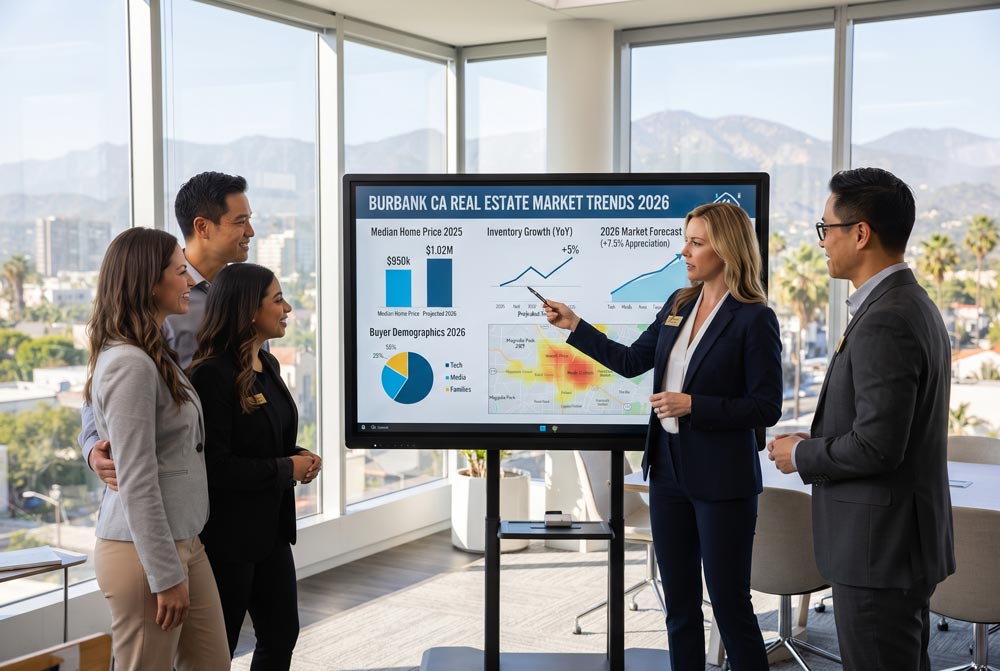
Let's start with the figure everyone asks about. As of early 2026, the median sale price in Burbank hovered around $1.3 million according to Redfin, a jump of roughly 15% from the prior year. Other trackers land a touch lower, closer to $1.15 million. Why the gap? Different sources measure different things, some lean on listings, others on closed sales. Either way, the direction is clear. Burbank stayed firm while plenty of markets wobbled.
Here's the thing about averages, though. They hide a lot. A condo near the airport and a Rancho-district family home live in totally separate price universes. If you're shopping, the citywide median is just a starting point, not a verdict.
Homes have been selling in roughly 40 to 52 days, a little slower than last year's pace. That's not a crash. It's a breath. Buyers got slightly more room to think, which after the frenzy of recent years feels almost healthy. Sellers still hold leverage, but the days of every listing sparking a bidding war? Those have eased.
What about the year ahead? Most forecasts point to modest, single-digit growth rather than dramatic swings. One projection sees values climbing around 7% over twelve months. Take that with a grain of salt, of course. Predictions are educated guesses, not guarantees. Rates, inventory, and the wider economy can all rewrite the script overnight.
Still, the underlying demand stays sturdy. People want to live near where they work, and with major employers like the Warner Bros. Studio Tour and Disney in the neighborhood, that demand isn't going anywhere. A short commute is worth real money in this town.
Supply has been the pinch point. When fewer homes list, competition tightens and prices hold. If more sellers step off the sidelines in 2026, expect a gentler, more balanced market. Keep an eye on listing counts. They tell you more about the near future than any single price stat.
If you're a buyer, patience pays right now. The market has cooled just enough to let you negotiate without losing your shirt. Get pre-approved early, line up financing, and lean on someone who knows the city. You can browse current sale properties in California to calibrate your expectations before you ever tour a place.
One first-time buyer told us, "I almost gave up after losing two offers. Then we got strategic about timing and waived nothing crazy. Closed on the third try." Persistence plus a good plan. That combination still wins.
Sellers, you've still got the upper hand, but the rules shifted slightly. Overpricing is punished faster now. Buyers have options and information, and a stale listing screams "something's wrong" even when nothing is. Price it right from day one, stage it well, and you'll likely move quickly.
Curious about local rules before you list? The City of Burbank site covers permits and disclosures you may need. And if managing the sale feels like too much, you can always contact a property management company for guidance on next steps.
Renting tells its own tale. With buying out of reach for many, the Burbank property market keeps strong rental demand, especially for places near transit and the studios. Landlords benefit, but they also carry responsibilities under fair housing rules set by HUD. Knowing those rules isn't optional. It's the cost of doing it right.
Looking for a place? You can scan available properties for rent in California and see what fits your budget. Rents have crept up alongside home values, so acting fast on a good listing matters more than ever.
One local owner shared, "I rent my house with Perch Properties because the rental market moves so fast I couldn't keep up alone. They fill vacancies quickly and screen tenants properly." Speed and care, together. That's the goal.
Here's a newer wrinkle. Buyers increasingly factor in wildfire and flood risk when choosing a home. Parts of Burbank carry elevated wildfire exposure, and that shapes insurance costs. It's not a reason to panic, but it's worth a conversation with your agent and insurer before you commit.
So what's the verdict on Burbank for 2026? Steady. Resilient. A little calmer than the wild years, which honestly is a relief for everyone. Prices held, the pace eased, and demand stayed real. Whether you're buying, selling, or renting, the move is the same. Get good information, work with someone local, and don't let headlines rush you into a bad decision.
Markets shift. Burbank, though, keeps showing up year after year as a place people genuinely want to be. That's the trend that matters most.
You can't talk 2026 without talking rates. Mortgage rates touch everything, from how much buyers can afford to how willing sellers are to give up their current low-rate loans. When rates stay elevated, some homeowners hold tight, unwilling to trade a cheap mortgage for a pricey new one. That "lock-in effect" keeps inventory thin, which props up prices even when demand softens.
For buyers, the math is personal. A small rate shift changes your monthly payment by hundreds of dollars. That's why getting pre-approved matters so much. You learn your real ceiling instead of guessing. And in a market like Burbank, knowing your number lets you act fast when the right place appears, no scrambling.
Sellers feel it too. Higher rates trim the pool of qualified buyers, which means pricing accurately becomes even more critical. The days of naming any number and watching offers pour in have faded. Smart pricing, backed by real comparable sales, is how homes still sell quickly in this environment.
One more thing worth saying. "The Burbank market" is really several markets stacked together. The Rancho district, with its equestrian charm, behaves differently than the media district near the studios, which differs again from the hillside pockets up north. Each has its own price band, buyer type, and pace.
That's exactly why a citywide median can mislead you. A condo near the airport and a four-bedroom near a top school live in separate worlds. When you study trends, zoom in. Look at the specific neighborhood you care about, not just the headline figure. A local agent can pull that granular data for you in minutes.
It's not just families and first-timers eyeing this city. Investors keep circling Burbank, and for good reason. The combination of steady employment, limited new construction, and constant rental demand creates a reliable income picture. When a market has strong fundamentals like these, it tends to weather downturns better than flashier, more speculative areas.
Rental yields here aren't the highest in the country, sure. But the trade-off is stability. Vacancies stay low because people genuinely want to live close to where they work. An investor told us, "I rent my house with Perch Properties and the unit rarely sits empty. In a town like this, demand does half the work for you." That dependability is the quiet appeal of Burbank.
For owners weighing whether to hold or sell in 2026, the answer often leans toward holding. Selling a stable, income-producing property in a tight market means giving up a hard-to-replace asset. Unless your circumstances demand it, sitting tight while values inch upward tends to pay off. Of course, every situation differs, so weigh your own goals carefully.
Enough analysis. What should you actually do with all this? If you're buying, get your finances in order now, before you fall for a listing. Pre-approval, a clear budget, and a local agent on speed dial put you ahead of ninety percent of the competition. When the right home surfaces, you move, no hesitation.
If you're selling, resist the urge to test a sky-high price. The market rewards realism in 2026. Price it where the comparable sales point, present it beautifully, and let the momentum work for you. A well-priced Burbank home still draws serious attention fast. You can review recent neighborhood activity on the Perch Properties blog to sharpen your timing.
And if you're renting or investing, focus on the fundamentals that make Burbank special. Proximity to employers, low vacancy, and a community people don't want to leave. Those forces don't show up in a single quarter's data, but they drive the long game. That's the real trend, the one that outlasts every headline.
Q: What do Burbank CA real estate market trends 2026 say about home prices?
A: Median sale prices ranged from roughly $1.15 million to $1.3 million in early 2026, with most forecasts predicting modest single-digit growth through the year.
Q: Is 2026 a buyer's or seller's market in Burbank?
A: It leans toward sellers due to tight inventory, but a slower pace gives buyers more room to negotiate than in recent years.
Q: How long do homes take to sell in Burbank right now?
A: Recent data shows homes selling in about 40 to 52 days on average, slightly slower than the previous year.
Q: Are rents rising in the Burbank property market?
A: Yes. Rents have climbed alongside home values, driven by strong demand near transit and major employers, so good listings get claimed fast.
Q: Should I wait to buy in Burbank in 2026?
Tenant Move-Out Checklist Burbank: 8 Turnover Steps (2026)
Best Time to List a Rental in Burbank: 2026 Guide
Short-Term vs Long-Term Rental Income Burbank: 2026 Comparison
1031 Exchange Guide for Burbank Rental Owners: 7 Rules
Antioch Property Management: 8 Things Owners Should Know (2026)
